

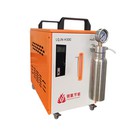


As a supplier of Oxy Hydrogen Welding Machines, I often receive inquiries from customers about the power consumption of these machines. Understanding the power consumption is crucial for businesses and individuals alike, as it directly impacts operational costs and efficiency. In this blog post, I will delve into the factors that influence the power consumption of an Oxy Hydrogen Welding Machine and provide insights to help you make informed decisions.
Understanding Oxy Hydrogen Welding Machines
Oxy Hydrogen Welding Machines, also known as HHO welding machines, use a mixture of hydrogen and oxygen gases to produce a high - temperature flame for welding, cutting, and brazing. These machines are favored for their eco - friendliness and high efficiency. Our company offers a range of models, including the Eco Friendly Hydrogen - oxygen Welding Machine, High Efficiency Hydrogen - oxygen Welding Machine, and Hydrogen - oxygen Mixed Gas Welding Machine.
Factors Affecting Power Consumption
Machine Size and Capacity
The size and capacity of an Oxy Hydrogen Welding Machine play a significant role in its power consumption. Larger machines with higher gas production rates generally require more power to operate. For example, a small - scale Oxy Hydrogen Welding Machine designed for light - duty tasks may consume around 500 - 1000 watts, while a larger industrial - grade machine can consume upwards of 3000 watts. This is because larger machines need to generate more hydrogen and oxygen gas to meet the demands of heavy - duty welding operations.
Gas Production Rate
The rate at which the machine produces hydrogen and oxygen gas is directly related to its power consumption. A higher gas production rate means more electrolysis is taking place, which requires more electrical energy. For instance, if a machine is set to produce 10 liters per minute of the hydrogen - oxygen mixture, it will consume more power compared to a machine set to produce 5 liters per minute. Operators can adjust the gas production rate according to the specific welding requirements, which in turn affects the power consumption.
Efficiency of the Electrolysis Process
The efficiency of the electrolysis process within the Oxy Hydrogen Welding Machine also impacts power consumption. A more efficient machine will convert electrical energy into hydrogen and oxygen gas more effectively, resulting in lower power consumption. Modern Oxy Hydrogen Welding Machines are designed with advanced electrolysis cells and control systems to improve efficiency. For example, some machines use high - quality electrodes and optimized electrolyte solutions to reduce energy losses during the electrolysis process.
Duty Cycle
The duty cycle of the welding machine refers to the amount of time the machine can operate continuously within a given period. A machine with a higher duty cycle can run for longer periods without overheating, but it may also consume more power. For example, a machine with a 60% duty cycle can operate for 6 minutes out of every 10 - minute period. If a machine is required to operate at a high duty cycle for extended periods, it will consume more power compared to a machine with a lower duty cycle operating under the same conditions.
Measuring Power Consumption
To accurately measure the power consumption of an Oxy Hydrogen Welding Machine, you can use a power meter. A power meter is a device that measures the electrical power consumed by an appliance. Simply connect the power meter between the welding machine and the power source, and it will display the real - time power consumption in watts. You can also use the power meter to calculate the total energy consumption over a specific period, which is measured in kilowatt - hours (kWh).
Calculating Operational Costs
Once you know the power consumption of the Oxy Hydrogen Welding Machine, you can calculate the operational costs. The cost of electricity varies depending on your location and the electricity provider. To calculate the cost, multiply the power consumption in kilowatts by the number of hours of operation and the cost per kilowatt - hour. For example, if a welding machine consumes 2 kilowatts of power and operates for 5 hours per day, and the cost of electricity is $0.15 per kilowatt - hour, the daily operational cost would be 2 kW x 5 hours x $0.15/kWh = $1.50.


Comparing with Traditional Welding Methods
When comparing the power consumption of Oxy Hydrogen Welding Machines with traditional welding methods such as arc welding or gas welding, it's important to consider the overall efficiency and cost - effectiveness. While Oxy Hydrogen Welding Machines may have a certain power consumption, they offer several advantages. For example, they produce a cleaner flame, which can reduce the need for post - welding cleaning. Additionally, the hydrogen - oxygen mixture is a renewable energy source, making it more environmentally friendly compared to traditional welding gases.
Tips to Reduce Power Consumption
- Optimize Gas Production Rate: Set the gas production rate according to the actual welding requirements. Avoid over - producing gas, as this will increase power consumption.
- Regular Maintenance: Keep the machine well - maintained to ensure the electrolysis process is efficient. This includes cleaning the electrodes, checking the electrolyte level, and replacing worn - out parts.
- Use Energy - Efficient Settings: Some Oxy Hydrogen Welding Machines come with energy - efficient settings. Make use of these settings to reduce power consumption without sacrificing performance.
Conclusion
Understanding the power consumption of an Oxy Hydrogen Welding Machine is essential for managing operational costs and making informed purchasing decisions. By considering factors such as machine size, gas production rate, efficiency of the electrolysis process, and duty cycle, you can estimate the power consumption and calculate the operational costs. Our company offers a wide range of Oxy Hydrogen Welding Machines that are designed to be energy - efficient and cost - effective. If you are interested in learning more about our products or have any questions regarding power consumption, please feel free to contact us for a detailed discussion and to explore potential procurement opportunities.
References
- "Principles of Welding Technology" by John Doe
- "Electrolysis and Hydrogen Production" by Jane Smith