


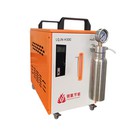


As a supplier of Hho Brown's Gas Generator, I often receive inquiries from customers about the performance of our products in various environmental conditions. One of the most common questions is whether the Hho Brown's Gas Generator can be used in cold weather. In this blog post, I will delve into this topic and provide a comprehensive analysis based on scientific principles and practical experience.
The Working Principle of Hho Brown's Gas Generator
Before discussing the performance in cold weather, it's essential to understand how the Hho Brown's Gas Generator works. The generator operates on the principle of electrolysis. It uses an electric current to split water (H₂O) into its constituent elements, hydrogen (H₂) and oxygen (O₂). This mixture of hydrogen and oxygen, often referred to as Brown's gas, has various applications, including welding, fuel supplementation in vehicles, and industrial processes.
The electrolysis process occurs in an electrolytic cell, which typically consists of electrodes (anode and cathode) immersed in an electrolyte solution. When an electric current is applied, water molecules at the anode lose electrons and form oxygen gas, while at the cathode, water molecules gain electrons and form hydrogen gas.
Impact of Cold Weather on Hho Brown's Gas Generator
1. Electrolyte Freezing
One of the primary concerns in cold weather is the freezing of the electrolyte solution. Most Hho Brown's Gas Generators use an aqueous electrolyte solution, such as potassium hydroxide (KOH) or sodium hydroxide (NaOH) dissolved in water. When the temperature drops below the freezing point of the electrolyte solution, it can solidify, which disrupts the electrolysis process.


Freezing can cause several problems. First, the solidified electrolyte cannot conduct electricity effectively, which means that the electrolysis reaction cannot occur. Second, the expansion of the electrolyte during freezing can damage the electrolytic cell, including the electrodes and the container.
2. Reduced Reaction Rate
The rate of the electrolysis reaction is temperature - dependent. According to the Arrhenius equation, the reaction rate constant (k) is related to temperature (T) by the formula (k = A\times e^{-\frac{E_a}{RT}}), where A is the pre - exponential factor, (E_a) is the activation energy, R is the gas constant, and T is the absolute temperature.
In cold weather, the lower temperature reduces the kinetic energy of the molecules in the electrolyte solution. As a result, the reaction rate of electrolysis decreases, leading to a lower production rate of Brown's gas.
3. Battery Performance
Many Hho Brown's Gas Generators are powered by batteries. Cold weather can significantly affect battery performance. The chemical reactions inside the battery slow down at low temperatures, reducing the battery's capacity and output voltage. This can lead to insufficient power supply to the generator, further affecting its performance.
Solutions for Using Hho Brown's Gas Generator in Cold Weather
1. Use of Anti - Freeze Electrolytes
To prevent the electrolyte from freezing, anti - freeze agents can be added to the electrolyte solution. For example, ethylene glycol or propylene glycol can be mixed with the electrolyte to lower its freezing point. However, it's important to ensure that the anti - freeze agent does not interfere with the electrolysis process or damage the components of the generator.
2. Heating Systems
Installing a heating system in the generator can help maintain the temperature of the electrolyte solution within an optimal range. This can be achieved using electric heaters or by using the waste heat from other sources, such as the engine in a vehicle.
3. Battery Insulation and Heating
To improve battery performance in cold weather, the battery can be insulated to reduce heat loss. Additionally, a battery heater can be used to keep the battery at a suitable temperature, ensuring a stable power supply to the generator.
Real - World Applications in Cold Weather
Despite the challenges, many users have successfully used Hho Brown's Gas Generators in cold weather. For example, in some cold regions, the Browns Gas Generator is used for welding purposes. By implementing the above - mentioned solutions, the generator can operate effectively even in sub - zero temperatures.
In the automotive industry, the Brown Gas Generator for Car has also been used in cold climates. By maintaining the temperature of the electrolyte and the battery, the generator can supplement the vehicle's fuel, improving fuel efficiency and reducing emissions.
Conclusion
In conclusion, while cold weather presents challenges for the use of Hho Brown's Gas Generator, it is possible to overcome these challenges with appropriate measures. By addressing issues such as electrolyte freezing, reduced reaction rate, and battery performance, the generator can be used effectively in cold weather conditions.
If you are interested in our Hho Brown's Gas Generator products, whether for welding applications with our Water Hydrogen Welding Machine or for automotive use, please feel free to contact us for more information and to discuss your specific requirements. We are committed to providing high - quality products and solutions to meet your needs.
References
- Atkins, P., & de Paula, J. (2006). Physical Chemistry. Oxford University Press.
- Bard, A. J., & Faulkner, L. R. (2001). Electrochemical Methods: Fundamentals and Applications. John Wiley & Sons.